

Hatha Yoga is not just about the body, it is about mastering your energy and mind. This guide to the Hatha Yoga Pradipika breaks down its timeless teachings into simple, practical understanding to help you build stability, control your breath, and move towards inner stillness.
WHAT IS THE HATHA YOGA PRADIPIKA?
The Hatha Yoga Pradipika is one of the most important classical texts of yoga, offering a practical system to master the body, breath, and energy.
It is a collection of teachings that explain:
- How to prepare the body for deeper practices
- How breath influences the mind and energy
- How to purify and balance the internal system
- How to direct prana (life force) consciously
- How to move towards stillness and meditative states
👉 This is not just physical practice.
👉 This is a structured path for inner discipline and transformation.
At its essence, Hatha Yoga reveals:
“When the body and breath are balanced, the mind becomes steady
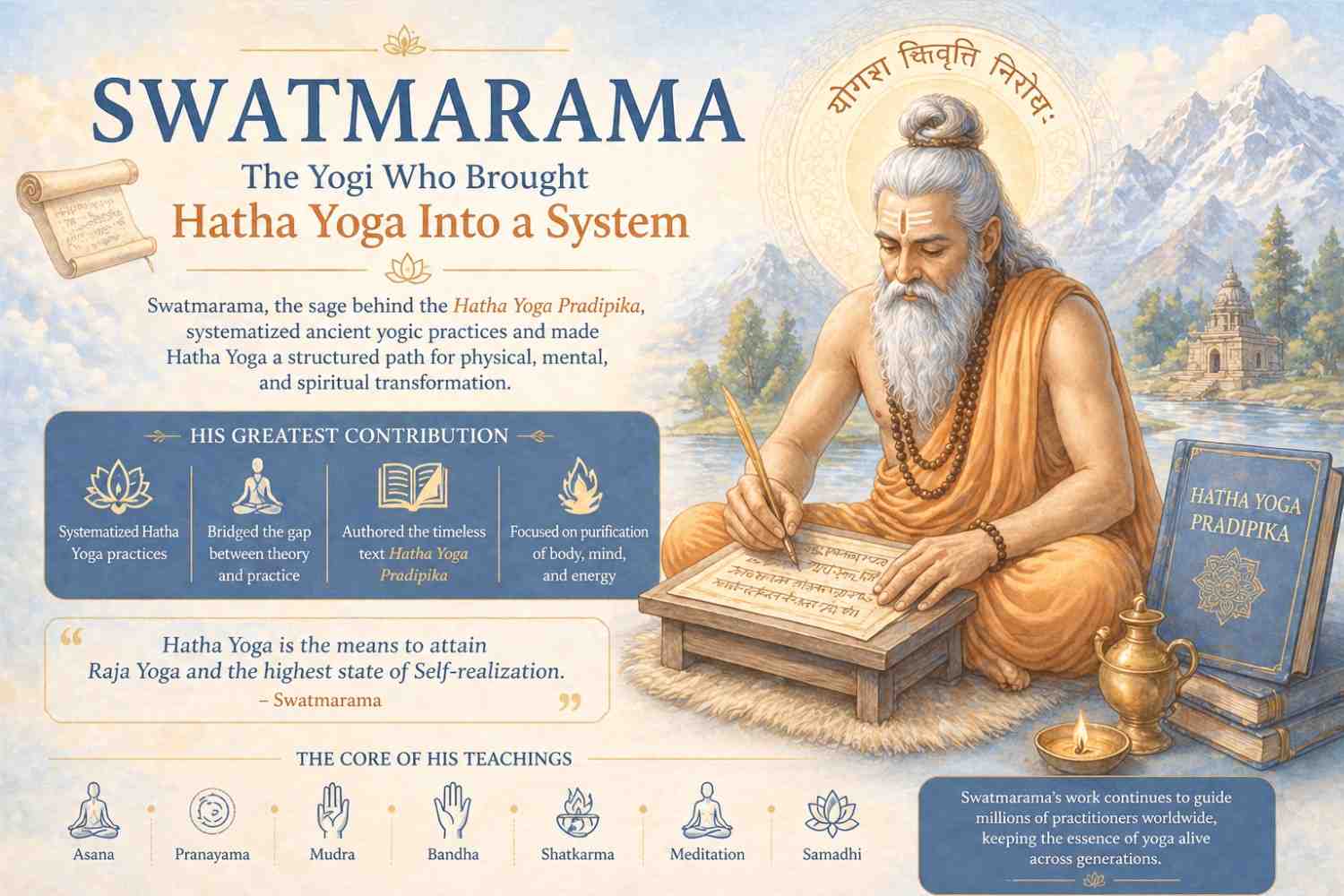
Swatmarama: The Yogi Who Brought Hatha Yoga Into a System
COMPLETE CHAPTER INDEX (OVERVIEW)
CHAPTER 1 – ASANA
- Invocation and respect to Guru (lineage begins with Adinath)
- Purpose of Hatha Yoga as a means to Raja Yoga
- Importance of discipline, moderation, and right environment
- Obstacles in practice (over-eating, over-effort, etc.)
- Supporting factors (enthusiasm, patience, consistency)
- Description of selected asanas (not many, only key ones)
- Emphasis on stability and ease
CHAPTER 2 – PRANAYAMA
- Importance of purifying the body before pranayama
- Discussion of Nadis (energy channels)
- Nadi Shodhana (purification through breath)
- Kumbhaka (breath retention practices)
- Eight types of classical pranayama
- Effects of breath control on mind and prana
CHAPTER 3 – MUDRAS & BANDHAS
- Concept of prana and its movement in the body
- Importance of conserving and directing energy
- Key Mudras:
- Maha Mudra
- Maha Bandha
- Maha Vedha
- Khechari Mudra
- Bandhas:
- Mula Bandha
- Uddiyana Bandha
- Jalandhara Bandha
- Awakening of Kundalini (mentioned in context of energy rise)
CHAPTER 4 – SAMADHI
- Nature of mind and dissolution of mental activity
- Role of Nada (inner sound) in meditation
- Laya (absorption of mind)
- Dhyana (meditative continuity)
- State of Samadhi
- Union and stillness as the ultimate aim
BEGIN YOUR PRACTICE
How to Start (Hatha Yoga Path)
Asana
Build stability in the body
Pranayama
Regulate breath and energy
Mudra & Bandha
Direct internal energy (prana)
Samadhi
Experience stillness of the mind
Real-Life Application
You feel restless and mentally scattered
Your breath and mind are not regulated
Slow your breath and observe it consciously
Calmness, balance, and clarity