
What is Yoga Shastra? This guide introduces the classical texts of Yoga: Patanjali Yoga Sutras, Bhagavad Gita, and Hatha Yoga Pradipika- and their true purpose.
Yoga Shastra Introduction: What Are the Classical Texts?
When people encounter Yoga today, they usually encounter it through practice, postures, breathing techniques, or meditation sessions. The entry point is almost always experiential.
But behind these practices lies something that is rarely explored in equal depth: the body of knowledge from which they originate.
This body of knowledge is broadly referred to as Yoga Shastra– the collected teachings, observations, and methods that define Yoga as a discipline.
To understand Yoga only through practice is similar to using a tool without understanding how it was designed. It may still work, but its full potential remains unclear.
The classical texts of Yoga provide this missing context. They do not merely describe techniques; they explain why those techniques exist, what they are meant to address, and how they fit into a larger process.
What Is Meant by “Shastra”?
The word Shastra is often translated simply as “scripture” or “text,” but this translation can be misleading.
In its original sense, a Shastra is not a collection of beliefs. It is a structured body of knowledge, something that explains, guides, and provides a framework for practice.
It is closer to a manual than a doctrine.
In the case of Yoga, the Shastra does not ask for acceptance. It offers a method. It describes the nature of the mind, the causes of disturbance, and the steps required to bring clarity.
This is why studying these texts is not separate from practice. It refines it.
Why Classical Texts Still Matter
It is reasonable to ask whether texts written centuries ago are still relevant today.
The answer depends on what they address.
If Yoga were only about physical movement, these texts might have limited relevance. But they are concerned primarily with the structure of the mind- attention, perception, reaction.
These aspects of human experience have not fundamentally changed.
The same restlessness, distraction, and instability that are described in classical texts are still present today, perhaps in even more intensified forms.
For this reason, the texts remain relevant: not as historical artifacts, but as practical guides.
The Three Foundational Texts
Among many works related to Yoga, three texts are particularly important for understanding its classical framework:
- Yoga Sutras of Patanjali
- Bhagavad Gita
- Hatha Yoga Pradipika
Each approaches Yoga from a different angle, but they converge on a common purpose: the refinement of human experience through discipline and understanding.
The Yoga Sutras of Patanjali: The Structure of the Mind
The Yoga Sutras are often considered the most direct and systematic presentation of Yoga.
They are concise, almost minimal in wording, but highly precise in content.
At the center of this text is a clear definition:
“योगश्चित्तवृत्ति निरोधः”
Yoga is the cessation of the fluctuations of the mind.
From this starting point, the text builds a complete framework. It explains how the mind functions, why it becomes unstable, and what can be done to bring it into a state of clarity.
It introduces key ideas such as:
- Chitta (the field of mind)
- Vritti (its fluctuations)
- Abhyasa (consistent practice)
- Vairagya (detachment)
What is notable is the absence of unnecessary elaboration. The text does not attempt to persuade. It presents observations and methods.
Because of this, it requires careful reading. It is not meant to be consumed quickly, but to be studied gradually.
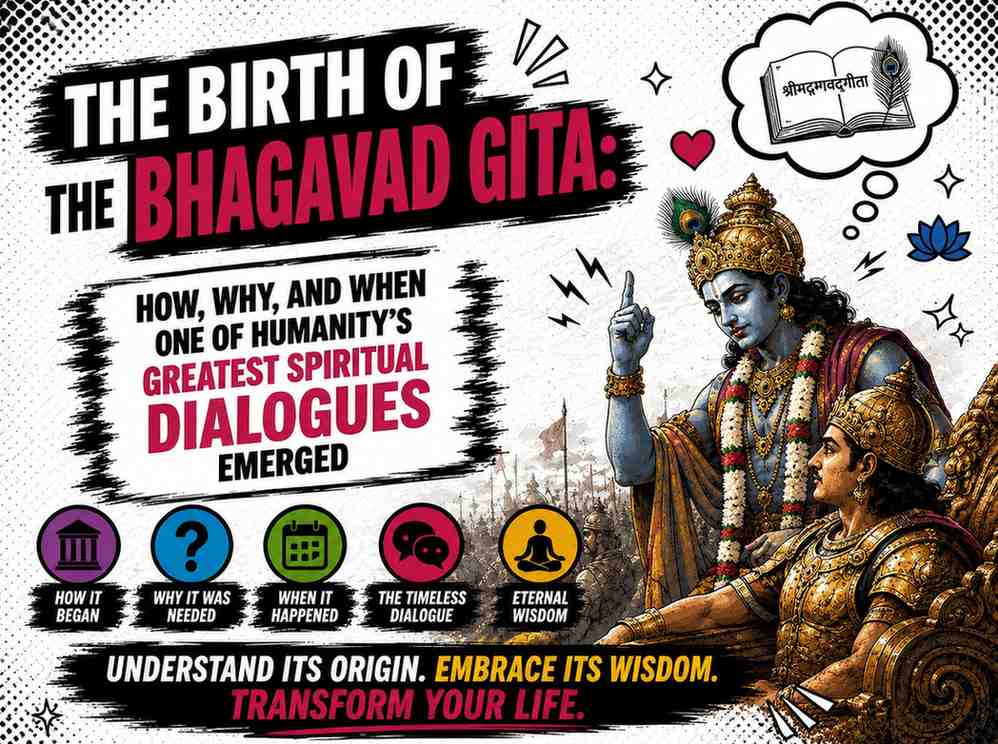
The Bhagavad Gita: Yoga in the Midst of Life
If the Yoga Sutras provide a structured analysis of the mind, the Bhagavad Gita expands the understanding of Yoga into the context of life and action.
It does not present Yoga as something practiced in isolation, but as something that operates within everyday situations: decision-making, responsibility, and conflict.
It introduces multiple dimensions of Yoga:
- Karma Yoga (action without attachment)
- Jnana Yoga (understanding and insight)
- Bhakti Yoga (devotion and orientation of attention)
One of its key statements defines Yoga as equanimity, maintaining balance regardless of outcome.
This perspective is important because it prevents Yoga from becoming limited to formal practice. It shows that the state of the mind during action is just as significant as the state of the mind in stillness.
The Hatha Yoga Pradipika: Preparing the System
The Hatha Yoga Pradipika focuses on the practical preparation required for deeper states of awareness.
Unlike the Yoga Sutras, which are primarily concerned with the mind, this text works through the body and breath.
It outlines practices such as:
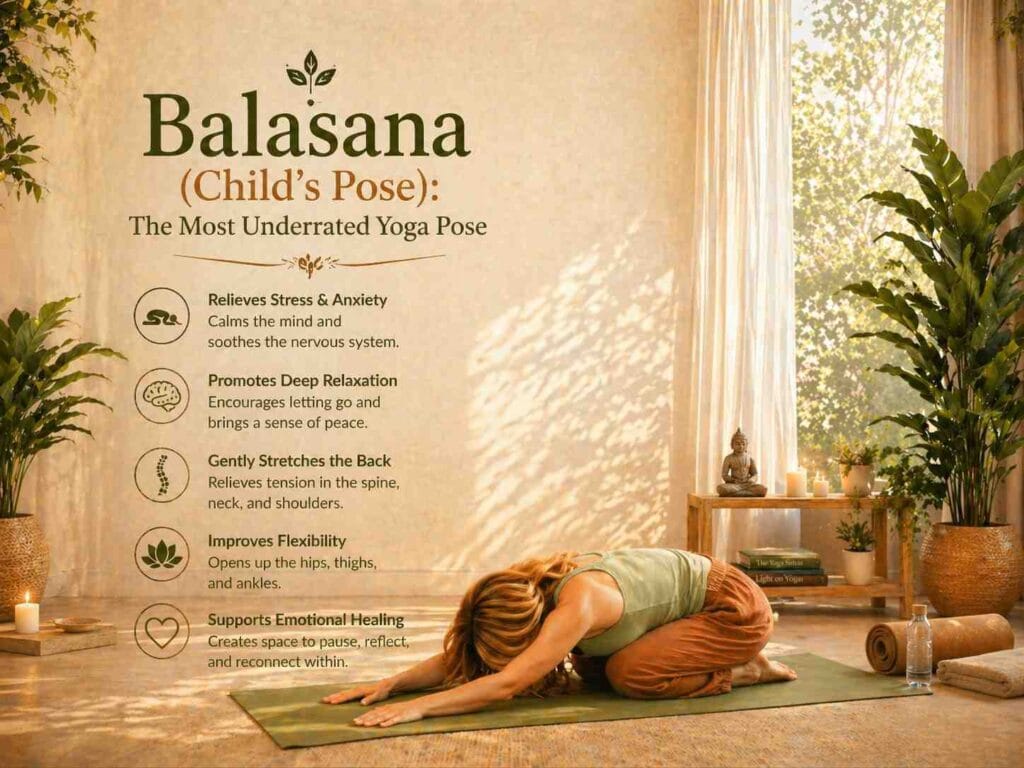
- Asana (posture)
- Pranayama (breath regulation)
- Mudra and Bandha (internal techniques)
However, it is important to understand its intent correctly.
These practices are not presented as ends in themselves. They are preparatory. They create conditions in which the mind can become steady.
The text repeatedly emphasizes moderation, discipline, and suitability. It recognizes that an unstable body or irregular habits can become obstacles in practice.
In this sense, it complements the more inward focus of the Yoga Sutras.
How These Texts Work Together
These three texts are often studied separately, but they are not disconnected.
They address different aspects of the same process.
- The Yoga Sutras explain what needs to be understood and stabilized (the mind).
- The Bhagavad Gita explains how this understanding applies in life and action.
- The Hatha Yoga Pradipika explains how to prepare the system to support this process.
Together, they form a more complete picture.
Focusing on only one of them can create an imbalance. For example, emphasizing physical practice without understanding the mind, or focusing on philosophy without practical discipline.
The integration of these perspectives is what gives Yoga its depth.
Why Understanding Matters for Practice
Without context, practices can become mechanical.
Postures can become routines. Breathing techniques can become exercises. Meditation can become an effort to “feel calm.”
The texts prevent this by clarifying purpose.
They show that the goal is not performance, but clarity. Not accumulation, but reduction of unnecessary activity.
When practice is informed by this understanding, it changes in quality. It becomes more deliberate, less reactive.
A Note on Interpretation
One challenge in approaching classical texts is interpretation.
Because they are concise and often written in a different cultural context, they can be misunderstood if approached casually.
This is why it is important to read them slowly, reflectively, and, when possible, alongside commentary.
At the same time, their core observations are direct. When read carefully, they describe experiences that are immediately recognizable.
Beginning with Yoga Shastra
For a beginner, engaging with these texts does not require prior expertise.
It begins with willingness to read without rushing.
Even a single line, when considered carefully, can provide insight. The purpose is not to accumulate information, but to refine understanding.
Over time, this understanding begins to influence practice naturally.
Yoga Shastra is not an abstract body of knowledge separate from practice. It is the framework that gives practice its direction.
Through texts like the Yoga Sutras, the Bhagavad Gita, and the Hatha Yoga Pradipika, Yoga is presented not as a set of techniques, but as a structured approach to understanding and refining human experience.
These texts do not offer quick answers. They offer a process.
And for those willing to engage with them carefully, they provide something that practice alone often cannot: a clear sense of what Yoga is actually meant to do.