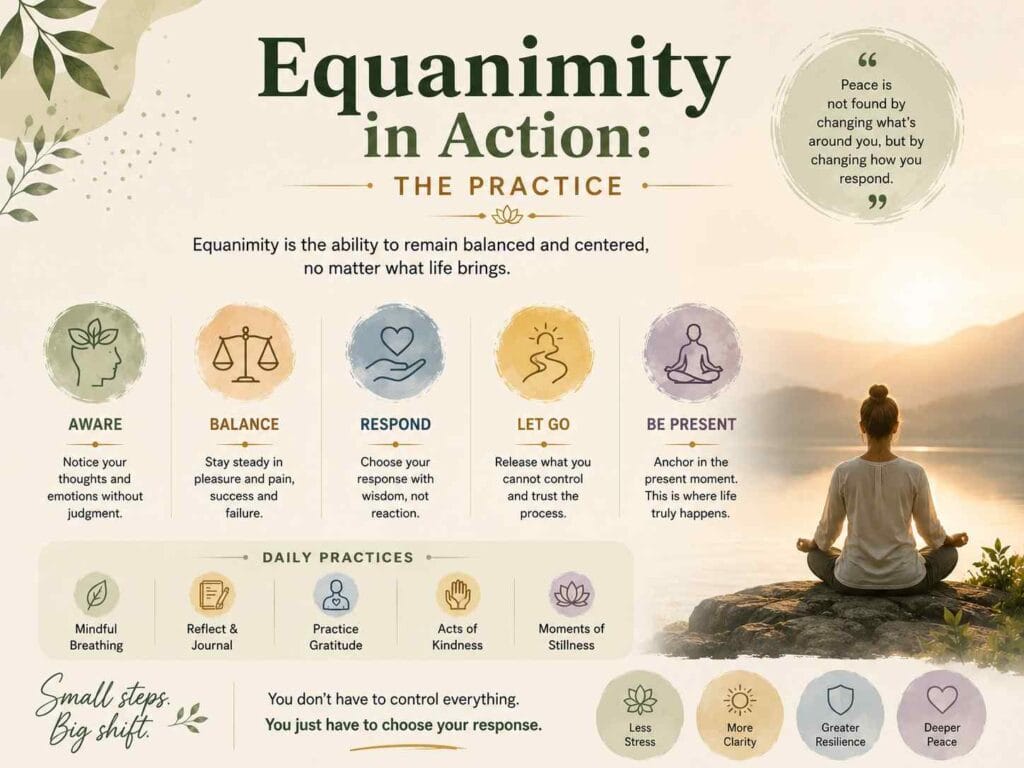

He lost his career, relationships, and sense of self. This powerful story shows how he rebuilt his life step by step through awareness, mindfulness, and quiet resilience
There was no single day Arjun could point to and say that everything ended. What happened to him did not arrive with noise or finality. It unfolded in layers, each one small enough to ignore at first, but together heavy enough to change everything. The job was the first thing to go, and even that did not feel like a collapse. It felt administrative, almost procedural, like something that belonged to a system rather than to him. He sat across from two people who spoke carefully, avoiding directness as if clarity would make it harsher. Words like “restructuring” and “alignment” were placed between them, and he nodded through most of it, not because he agreed, but because there was nothing to hold onto strongly enough to resist. When he stepped out of the building, the world outside looked exactly the same, and that was what unsettled him the most.
For a few days, he carried the loss lightly, almost convincingly. He told himself that it was temporary, that things would adjust, that he would find something else. But what he did not notice was how quickly the structure of his life began to dissolve. Without routine, time stopped organizing itself. Mornings extended into afternoons without definition, meals became irregular, and sleep followed no clear pattern. He spent hours in front of his laptop, applying, refreshing, waiting, each action slowly losing intention as responses became less frequent.
His girlfriend did not leave immediately. She stayed through the early uncertainty, through the days when he still spoke with some clarity about what would come next. But what changed was not the situation, it was the way he occupied it. He became less available, not physically, but in presence. Conversations lost continuity, pauses became longer, and responses felt delayed, as if he was somewhere else even when sitting in front of her. At first, she asked him what was wrong. Then she tried to understand without asking. Eventually, she stopped trying. When she left, it was not dramatic. It was a quiet conclusion to something that had already been drifting apart. He did not argue, not because he agreed, but because he did not have enough clarity to hold onto anything firmly.
Friends disappeared in a similar way, without conflict, without closure. Messages went unanswered, not intentionally, but gradually. It became easier to avoid than to explain. Conversations required a version of himself he could not access anymore. Over time, the calls stopped coming, and the silence that followed felt less like abandonment and more like something he had allowed to happen.
His family stayed longer, but their presence changed. Questions became sharper, less patient. What was the plan? How long would this continue? What exactly was he doing? He answered as best as he could, but his answers lacked certainty, and that uncertainty was not well received. Concern turned into frustration, and frustration into distance. Calls became shorter, then infrequent, until they were no longer part of his routine.
Somewhere in the middle of all this, he lost something he could not define. It was not just his job, or his relationships. It was the sense that he was moving toward something. Without that, his days began to feel disconnected from each other. Time passed, but it did not accumulate into anything meaningful. It simply repeated.
Financial pressure followed, quietly but steadily. Savings reduced, expenses continued, and borrowing became necessary. What started as temporary turned into something extended. Debt accumulated in small increments, each one manageable on its own, but together forming a weight he carried constantly. Sleep became irregular, food lost its place, and even rest did not feel like rest. It felt like waiting.
The lowest point did not arrive dramatically. It appeared as a kind of stillness that was not peaceful. One afternoon, sitting on the floor with his back against the wall, he realized that there was nothing he was trying to do. Not because everything was resolved, but because he had stopped believing that effort would change anything. It was not acceptance. It was exhaustion.
It was around this time that something unexpected happened, not as a solution, but as an interruption.
He had stepped out one evening without a clear reason, just to avoid being in the same room again. He walked without direction until he reached a small park he had passed many times but never entered. It was not particularly maintained, not crowded, not empty either. Just a place that existed without asking for attention.
He sat on a bench, looking at nothing in particular.
After a while, he noticed someone sitting a little distance away. An older man, not doing anything noticeable. No phone, no book, no sign of distraction. Just sitting.
Arjun did not think much of it at first. But after some time, he realized something unusual. The man had not moved. Not in the way people usually do, no shifting, no reaching for something, no visible restlessness.
It was not forced stillness. It was natural.
For reasons he could not explain, Arjun stayed longer than he intended.
Eventually, the man stood up and walked past him. As he passed, he paused briefly and said, “You don’t have to carry everything at once.”
Arjun looked at him, unsure of what to say.
“I’m not carrying anything,” he replied automatically.
The man gave a slight nod, not in agreement, not in disagreement, just acknowledgment, and then continued walking.
The sentence did not feel like advice. It felt incomplete.
But it stayed.
The next day, without planning to, Arjun returned to the same place. The man was there again, sitting in the same way. This time, Arjun sat closer.
They did not start talking immediately.
After a while, Arjun asked, “What were you doing yesterday?”
The man looked at him and said, “Sitting.”
There was no explanation following it.
After a pause, he added, “Watching what doesn’t stay.”
Arjun did not fully understand, but something about it held his attention.
Over the next few days, they spoke occasionally. Not long conversations, not structured discussions. Just brief exchanges.
The man did not give instructions. He did not explain meditation as a technique or mindfulness as a concept.
He simply suggested, “Sit for a few minutes. Don’t try to change anything. Just notice.”
That was all.
Arjun did not expect much from it. But one evening, back in his room, he sat without distraction.
The thoughts came, as they always had. Repetitive, heavy, unresolved.
But instead of reacting, he watched.
Not successfully at first. The mind moved, pulled, resisted.
But occasionally, there were moments where he was not completely inside the thought.
There was a slight distance.
It did not remove the thoughts.
But it reduced their hold.
That was the beginning.
Not of transformation.
Of space.
He began sitting regularly. Not for long, not with discipline, just consistently.
The same patterns appeared. But over time, their intensity reduced.
The urgency softened.
From there, other things followed.
He started structuring his day again. Small things. Fixed waking time, simple meals, short walks.
He began applying for work again, but without the same desperation.
The difference was not in what he was doing.
It was in how much he was carrying while doing it.
Months passed.
Nothing changed suddenly.
But things moved.
Work returned, slowly. Not the same as before, but enough.
Some connections returned, not all.
But most importantly, the weight he carried constantly was no longer always present.
One evening, sitting in the same room that had once felt unbearable, he noticed something.
There was no urgency to escape it.
No pressure to fix everything.
He was just there.
And for the first time, that felt enough to continue. Not because everything had been restored. But because something within him no longer depended on everything staying in place.