
Ancient Knowledge. Simplified.
Yoga Shastra The Original Texts
Thousands of years before yoga became a fitness trend, it was a precise science of the mind. These are the original texts. Read carefully, summarised honestly, and made simple for the modern seeker.
Choose Your Scripture
Three foundational texts. Each one a complete guide to a different dimension of yoga.
Text 01
Patanjali Yoga Sutras
400 BCE. 196 Sutras. 4 Chapters.
The most precise manual ever written for the human mind. Patanjali did not invent yoga. He compiled its entire science into 196 short sutras. This is where real yoga begins.
Pada 1: Samadhi Pada. Pada 2: Sadhana Pada. Pada 3: Vibhuti Pada. Pada 4: Kaivalya Pada.
Read Chapter IndexText 02
Hatha Yoga Pradipika
15th Century CE. 4 Chapters. Author: Swatmarama.
The original manual for Hatha Yoga. Asanas, pranayama, mudras, bandhas, and shatkarma. Written over 600 years ago, this text reveals that yoga was never just about flexibility.
Ch 1: Asanas and Shatkarma. Ch 2: Pranayama and Kumbhaka. Ch 3: Mudras and Bandhas. Ch 4: Samadhi and Nadanusandhana.
Read Chapter IndexText 03
Bhagavad Gita
2nd Century BCE. 18 Chapters. 700 Verses.
The conversation between Arjuna and Krishna on a battlefield that became the most profound guide to life ever written.
Ch 1: Arjuna Vishada Yoga. Ch 2: Sankhya Yoga. Ch 3: Karma Yoga. Ch 4: Jnana Yoga…
Read Chapter IndexAll chapters below are published as individual posts. Read in order or jump to any chapter directly.
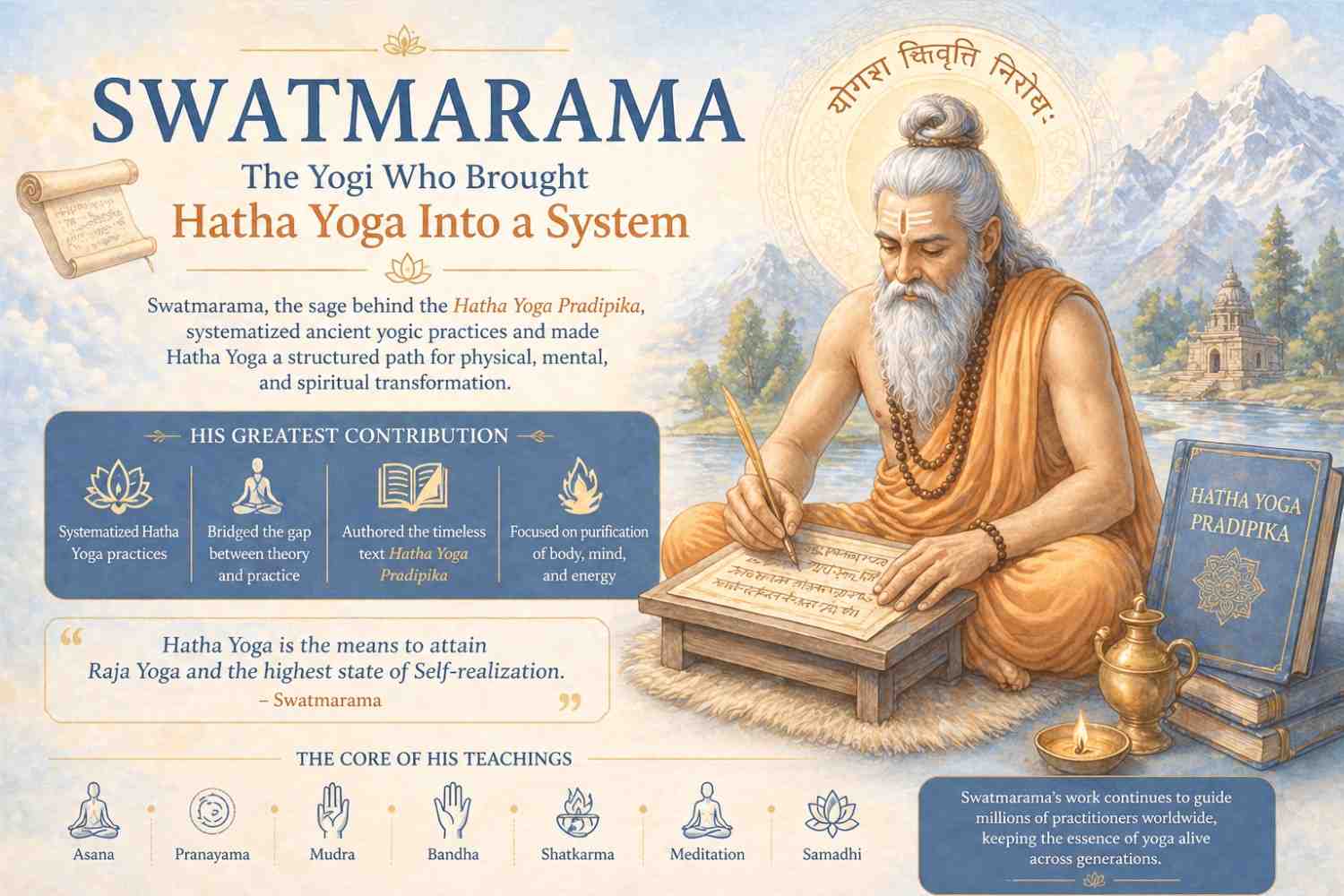
Swatmarama: The Yogi Who Brought Hatha Yoga Into a System
the life and teachings of Swatmarama, the author of the Hatha Yoga Pradipika, and understand how his work shaped the foundation of Hatha Yoga through body, breath, and energy practices. Introduction In the history of yoga, some names are widely recognized and frequently discussed, while others work quietly in the background, shaping entire traditions without
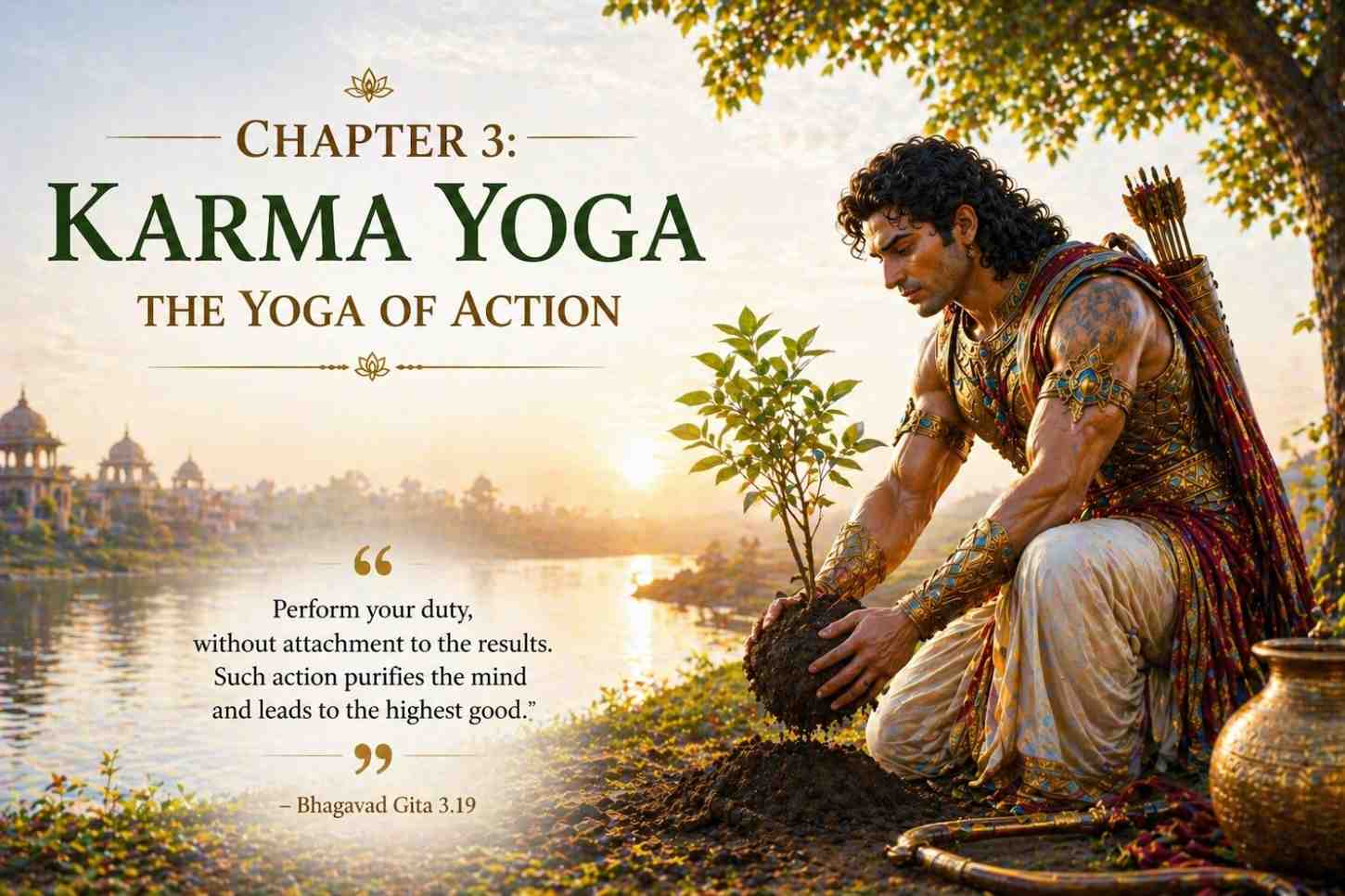
Chapter 3: Karma Yoga – The Yoga of Action
Explore Karma Yoga in Chapter 3 of the Bhagavad Gita. Learn how to act without attachment, reduce inner conflict, and bring clarity to everyday action. Verses 3.1–3.2 Arjuna said:If you consider knowledge superior to action, O Krishna, then why do you urge me to engage in this terrible action? Your words seem to confuse my
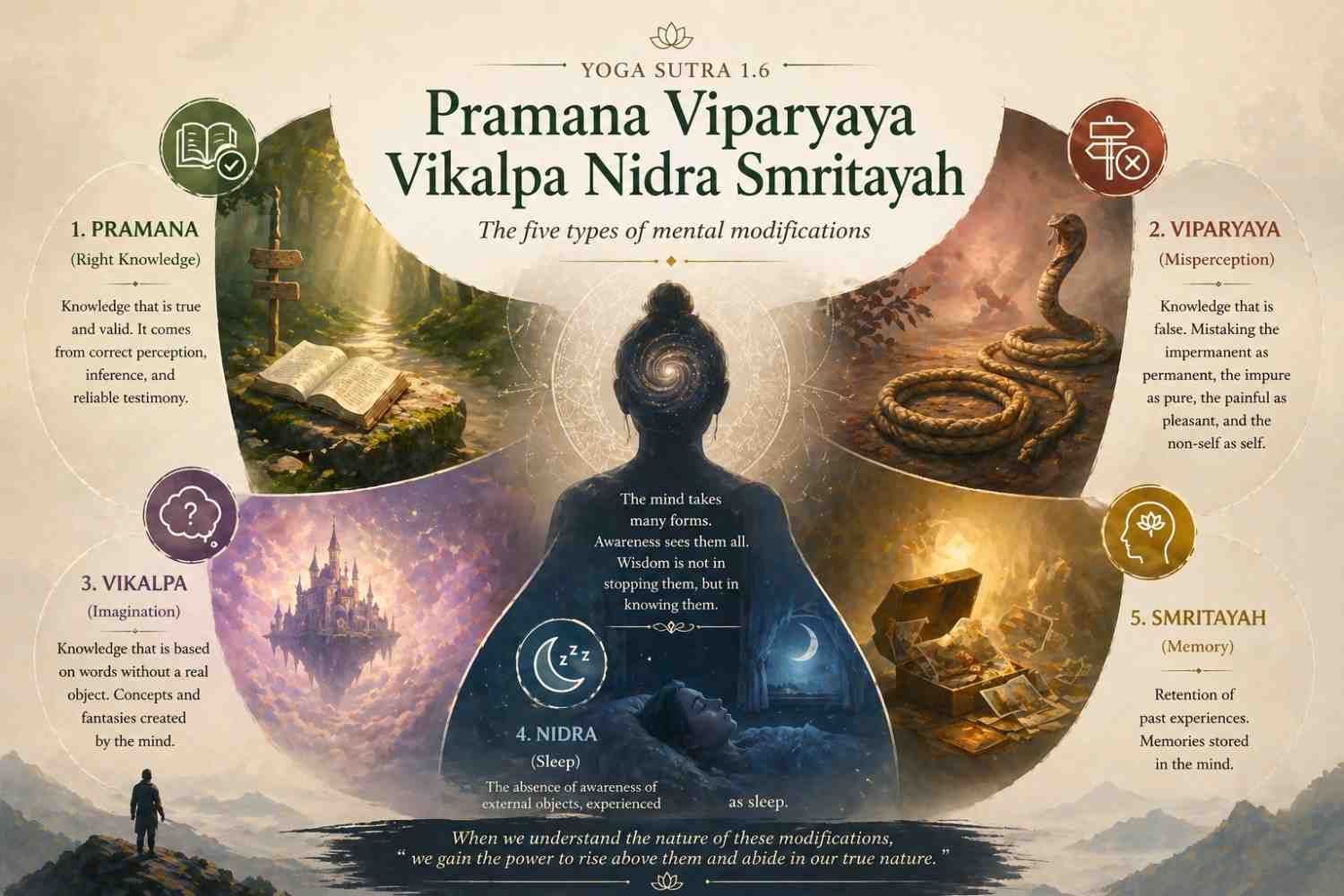
Sutra 1.6: Pramana Viparyaya Vikalpa Nidra Smritayah
Explore Yoga Sutra 1.6 and understand the five types of mental modifications: pramāṇa, viparyaya, vikalpa, nidrā, and smṛti, and how they shape the mind. The Sutra प्रमाण विपर्यय विकल्प निद्रा स्मृतयः॥१.६॥ Transliteration:Pramāṇa Viparyaya Vikalpa Nidrā Smṛtayaḥ Translation:The modifications of the mind are of five kinds: valid cognition, misperception, imagination, sleep, and memory. The Context of
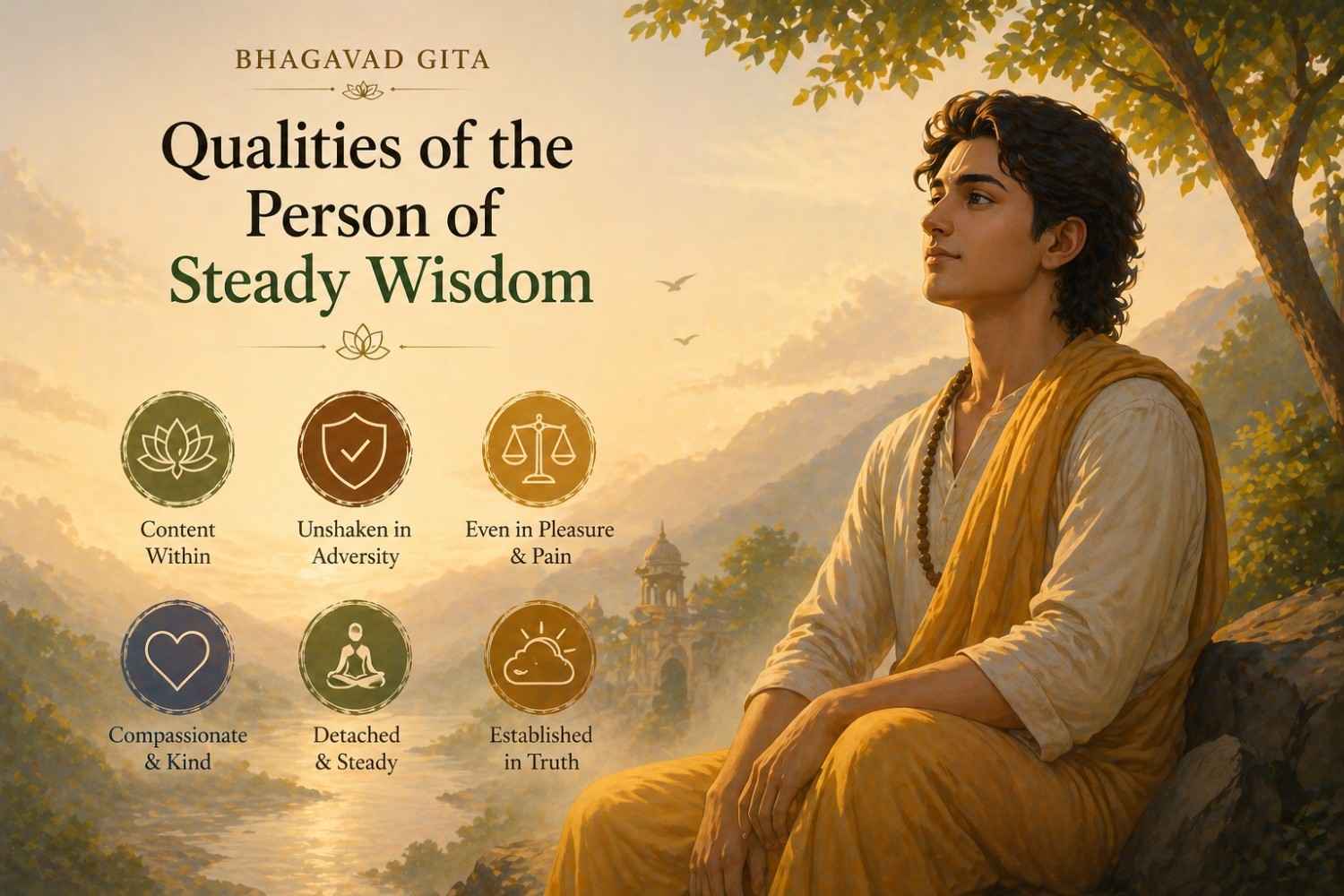
Qualities of the Person of Steady Wisdom
Struggling with emotional ups and downs? Learn the qualities of a steady mind (Sthitaprajna) and how the Bhagavad Gita explains lasting inner stability. The Question That Follows Understanding In Chapter 2 of the Bhagavad Gita, Arjuna’s inquiry undergoes a subtle but important transformation. Earlier, his questions were centered around action, whether to act or withdraw,
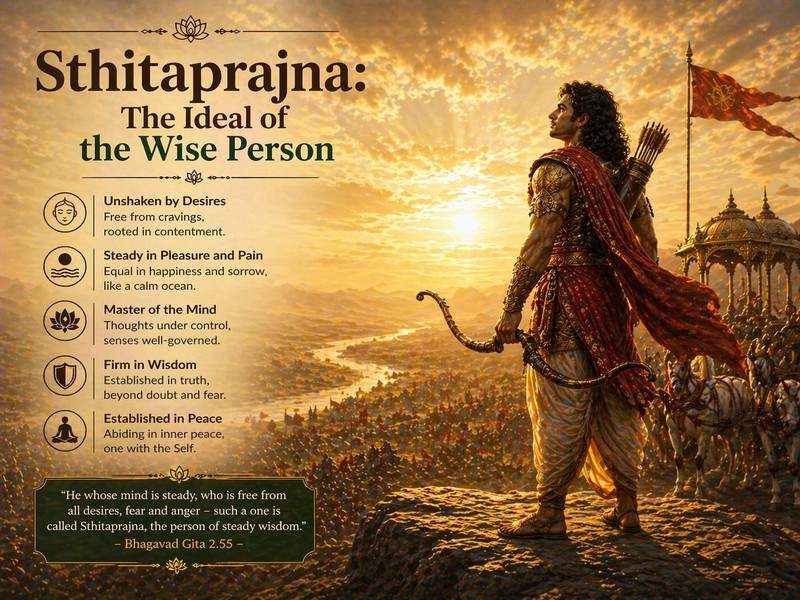
Sthitaprajna: The Ideal of the Wise Person
Discover the meaning of Sthitaprajna in the Bhagavad Gita. Learn how Krishna describes the wise person, free from desire, steady in all situations, and established in inner clarity. The Question That Arises After Clarity In Chapter 2 of the Bhagavad Gita, Arjuna’s inquiry undergoes a subtle but important refinement. Initially, his concern is immediate and
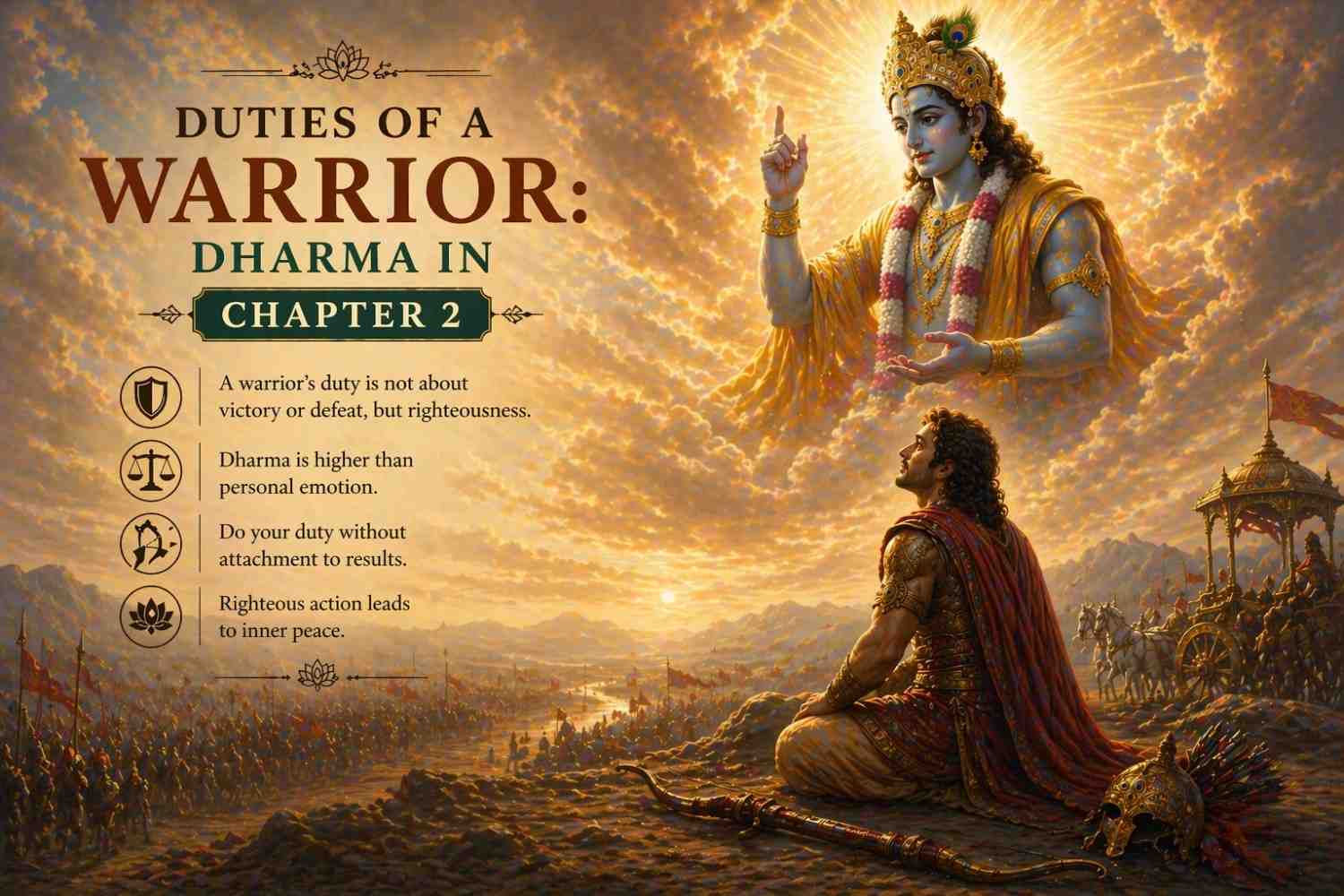
Duties of a Warrior: Dharma in Chapter 2
Explore dharma in Chapter 2 of the Bhagavad Gita and understand how Krishna guides Arjuna to act with clarity, responsibility, and detachment beyond fear, emotion, and confusion. The Turning Point in Arjuna’s Dilemma In Chapter 2 of the Bhagavad Gita, a decisive shift takes place. Arjuna’s condition moves from emotional overwhelm to a deeper, more
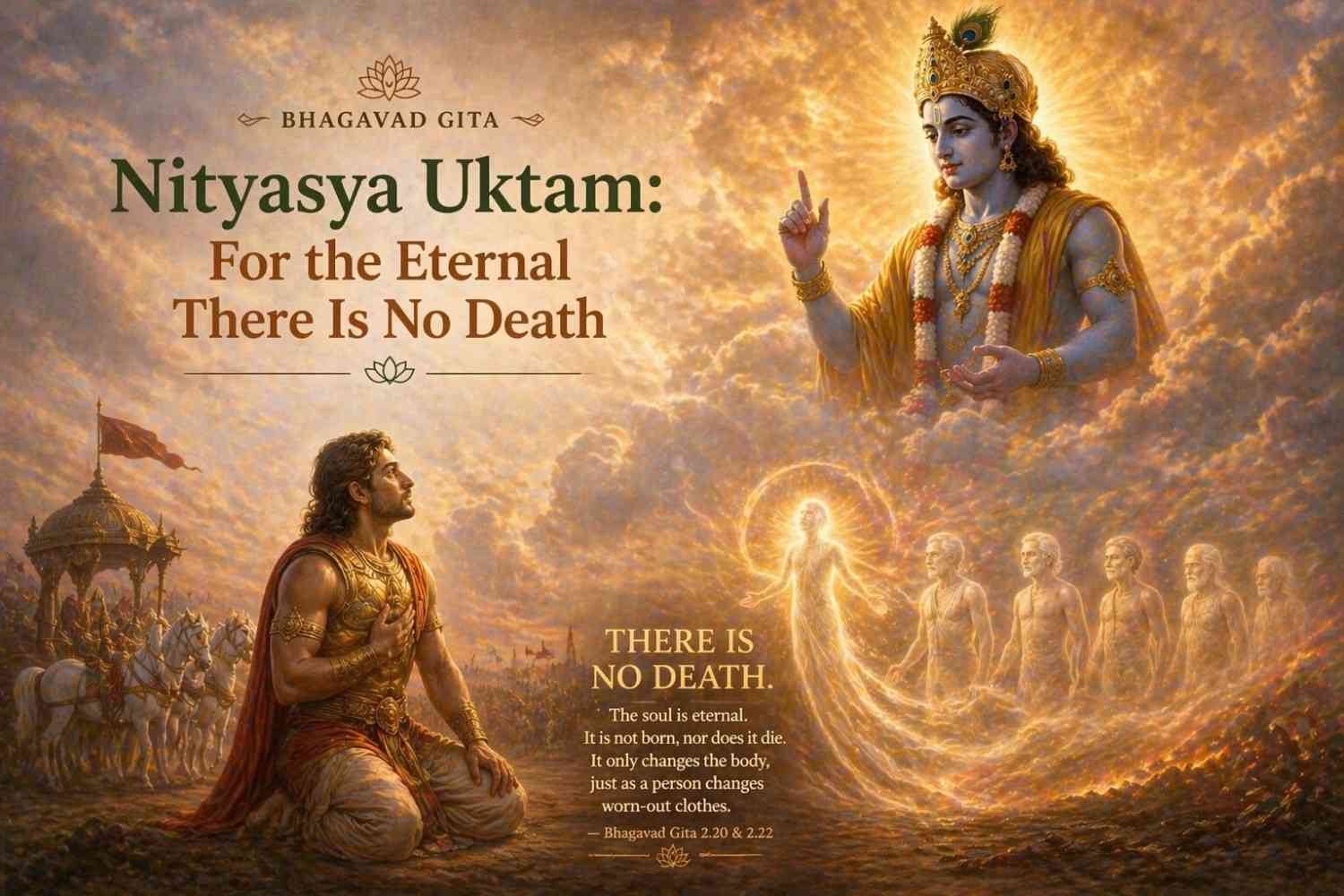
Nityasya Uktam: For the Eternal There Is No Death
“For the eternal there is no death” is a core teaching of the Bhagavad Gita. Discover how Krishna explains the eternal Self, removes fear of death, and reveals the truth beyond the body and change. The Context of This Teaching This teaching emerges at a moment of complete inner conflict within the Bhagavad Gita. Arjuna
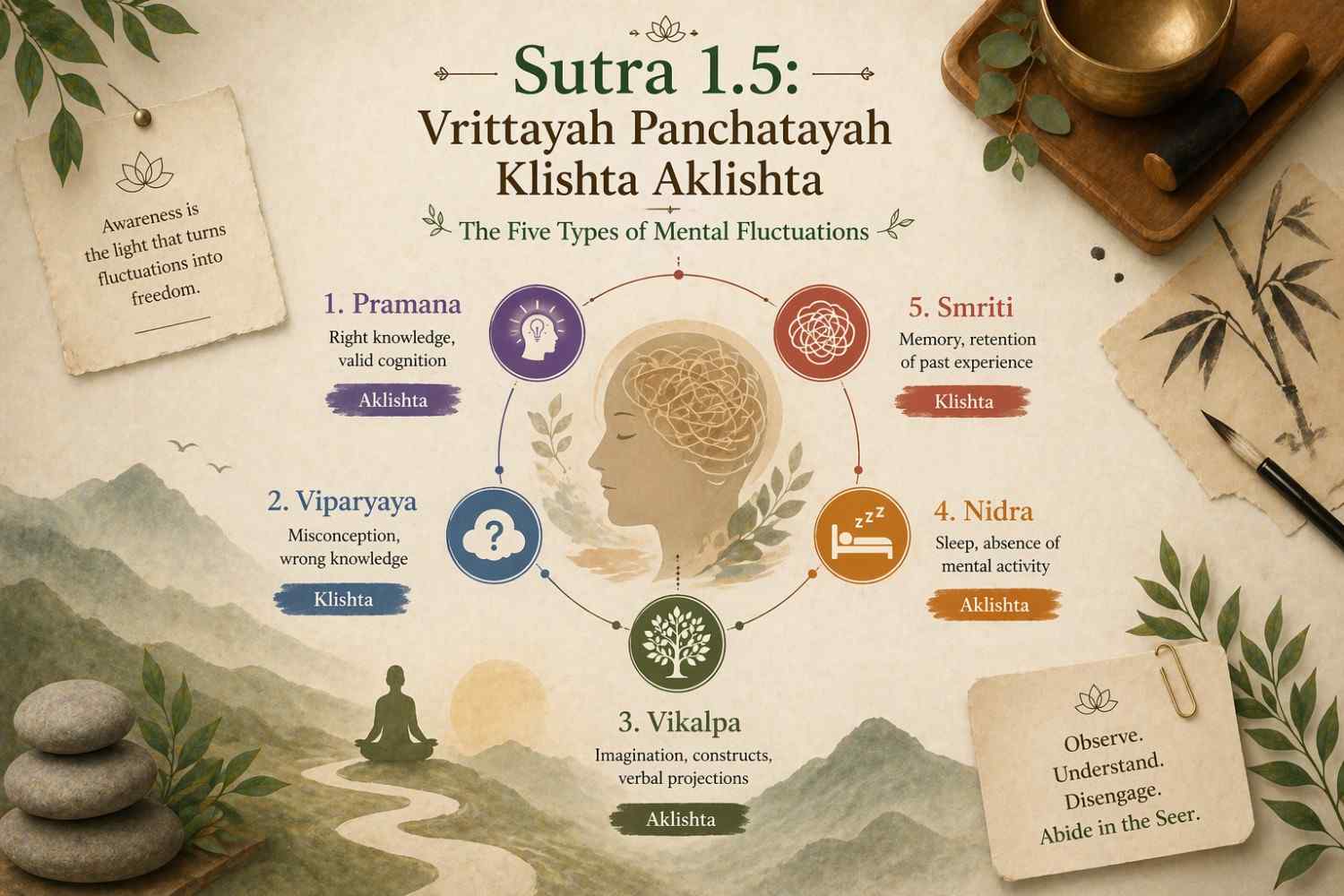
Sutra 1.5: Vrittayah Panchatayah Klishta Aklishta
Sutra 1.5 of the Yoga Sutras of Patanjali explains the five vrittis of the mind and their nature as kliṣṭa (afflicted) or akliṣṭa (non-afflicted). Learn how understanding mental patterns becomes the first step toward clarity and inner stillness. The Sutra (Original Sanskrit) वृत्तयः पञ्चतय्यः क्लिष्टाऽक्लिष्टाः॥ १.५॥ Translation “The modifications of the mind are of five
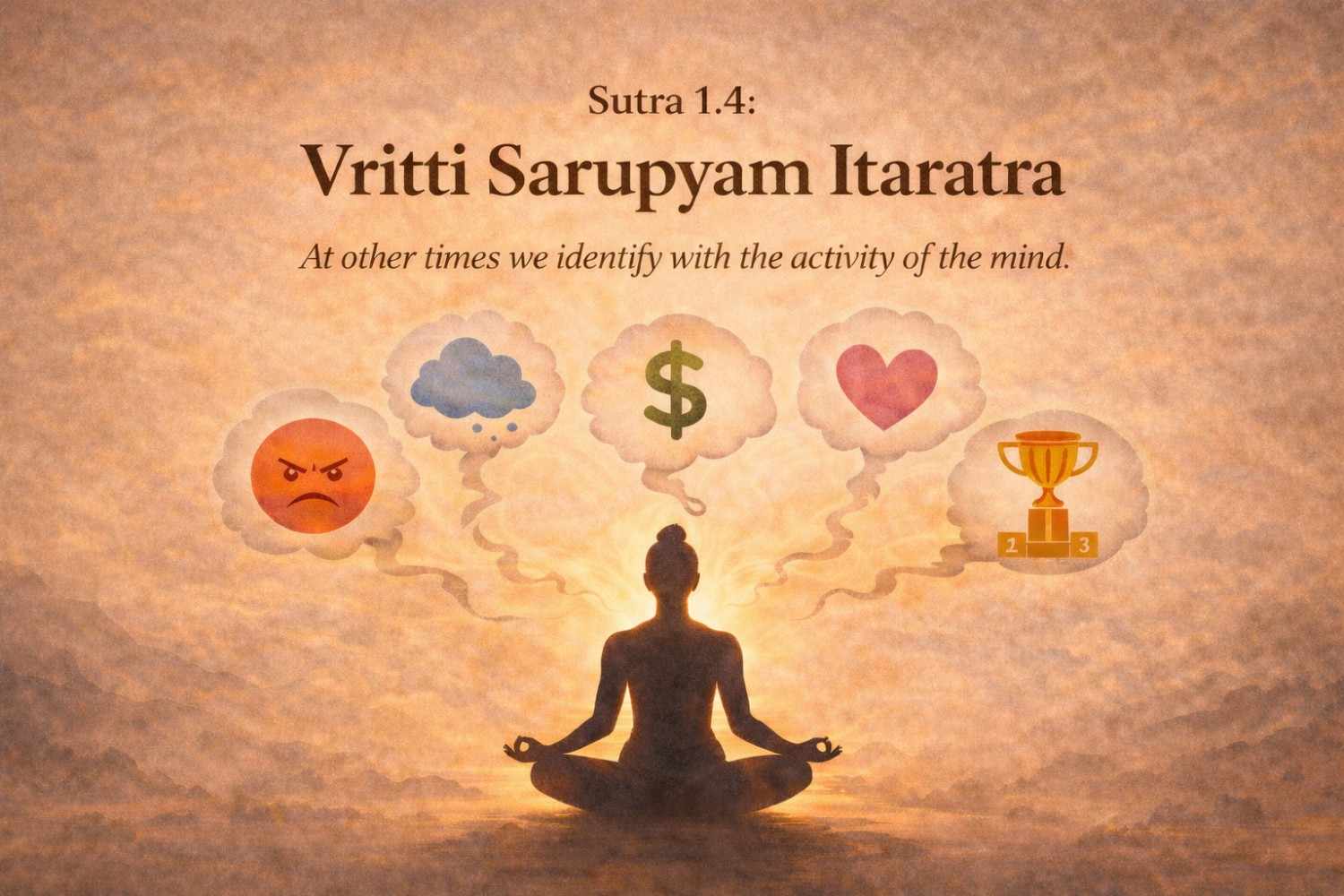
Sutra 1.4: Vritti Sarupyam Itaratra
Yoga Sutra 1.4, Vritti Sarupyam Itaratra, explains how we become identified with the fluctuations of the mind. Discover its deeper meaning, the nature of the Seer, and how this insight reveals the root of suffering and the path to inner clarity. Translation Sanskrit:वृत्ति सारूप्यमितरत्र ॥१.४॥ Transliteration:Vritti Sārūpyam Itaratra Accurate English Translation:“At other times, the Seer
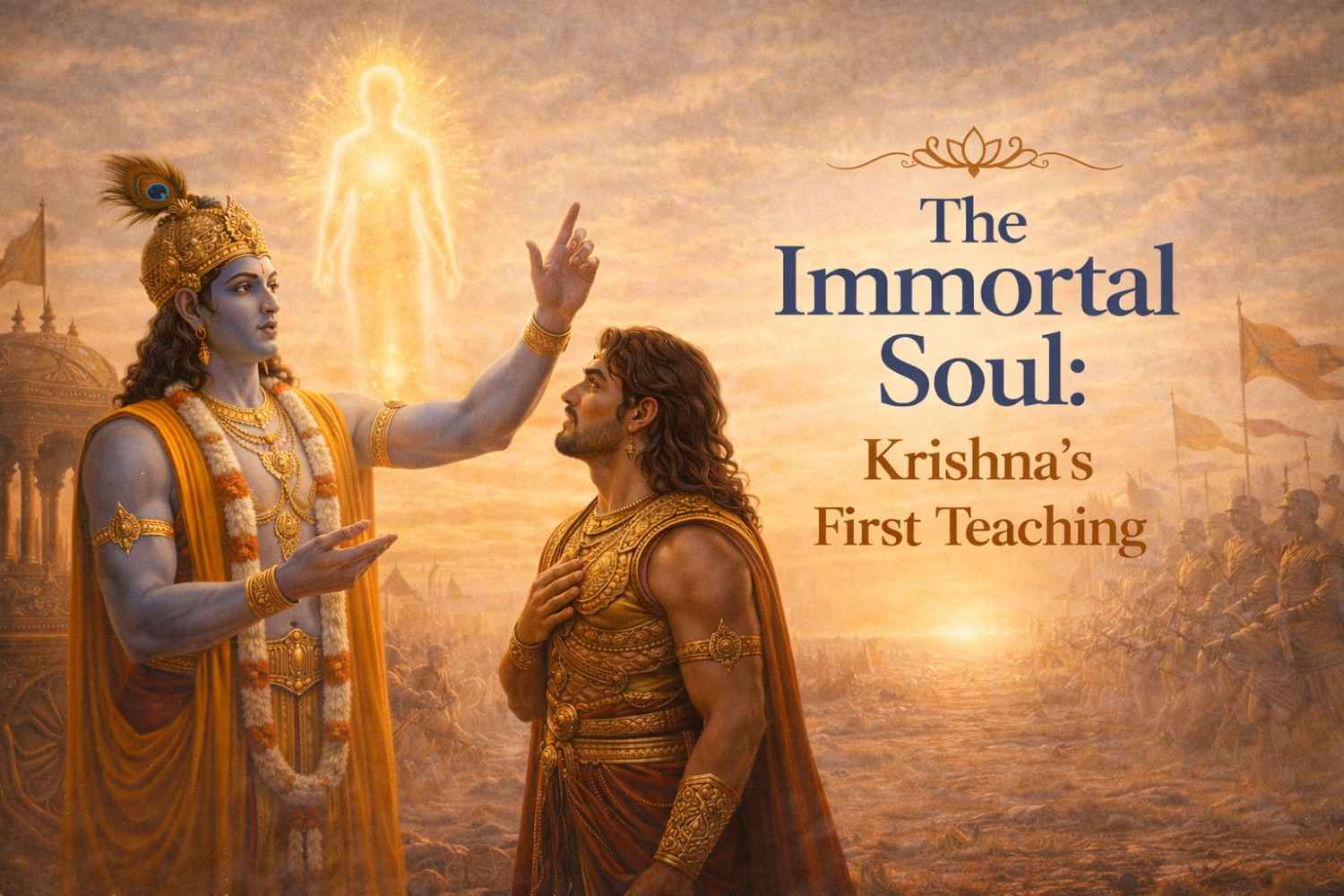
The Immortal Soul: Krishna’s First Teaching
In the Bhagavad Gita, Krishna begins with the truth of the immortal soul. Explore how understanding the eternal Self transforms perception, removes fear of death, and brings clarity to life and action. The Moment Where Everything Changes On the battlefield of Kurukshetra, as described in the Bhagavad Gita within the larger narrative of the Mahabharata,